
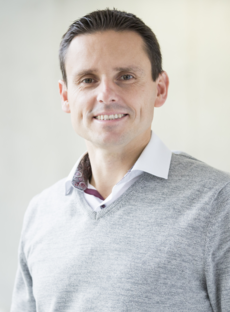
Prof. Dr. Darko Jekauc
- Head of the Health Education and Sports Psychology department
 111, Geb. 40.40 / Raum 103, Geb. 20.50
 +49 721 608 - 45725
 Darko Jekauc ∂does-not-exist.kit edu
Engler-Bunte-Ring 15
76131 Karlsruhe
Research areas
My research focuses on the psychological foundations of health-promoting physical activity and on the question of how physical activity and sports are incorporated into daily life, sustained over the long term, or discontinued. At the core of my work is a dynamic perspective on health behavior that examines motivational, affective, self-regulatory, and habitual processes over time and in specific situational contexts.
A particular focus is on the intention-behavior gap—that is, the question of why people often fail to act in accordance with their intentions. In this context, I examine how intentions, affect, self-efficacy, planning, self-control, and habits interact in specific behavioral episodes and how these processes change in everyday life. Methodologically, I use, among other things, longitudinal studies, Ecological Momentary Assessment, digital data collection formats, mixed-methods approaches, and intervention-based evaluation designs.
My research applies to physical activity-based health promotion, prevention, rehabilitation, and aftercare, as well as digital and hybrid interventions. The goal is to develop theoretically grounded and empirically validated approaches that sustainably promote physical activity, health, and participation. In this way, my research combines foundational work in sports psychology with health psychology intervention research and interdisciplinary health services research.
Research projects
Current projects
Coach the Coaches: Evaluating a Sports-and-Play Intervention at a Federal Asylum Center
The "Coach the Coaches" project evaluates a capacity-building sports and physical activity intervention in which staff members at federal asylum centers are trained to become "coaches." These coaches lead regular sports and recreational activities for residents to improve their mental health and well-being. The project combines applied research with practical implementation and has as a target the development of a scalable model for mental health promotion in refugee contexts.
By strengthening mindfulness, social support, physical self-concept, and stress resilience, the intervention aims to reduce mental health burdens such as anxiety, depression, and post-traumatic stress disorder. At the same time, process factors such as acceptance, participant satisfaction, and quality of implementation are being examined to ensure the sustainability and transferability of the approach. Further Information
Hochschulsportstudie
The objective of the Hochschulsportstudie is to systematically investigate and psychologically explain intra-individual fluctuations in participation in regularly held sports and health classes. The focus lies on the assumption that decisions for or against classes participation are not determined solely by stable individual characteristics, but are substantially influenced by day-to-day changes in motivational and affective processes. The study particularly focuses on the interplay between intention and habit, as well as the role of anticipated affect in intention formation and actual behavioral execution. In cooperation with the university sports department of the Karlsruhe Institute of Technology (KIT), the study analyzes how intentions to participate in classes change in everyday life, to what extent these changes are influenced by anticipated emotional reactions, and how strongly habit-related processes moderate the translation of intentions into behavior. A central research interest is to clarify why participation does not always occur even with high situational intention and under what conditions intentions are stable enough to translate into actual behavior. To capture these dynamic processes, participants are accompanied over a five-week period within the framework of an Ambulatory Assessment. Using daily smartphone surveys, short-term fluctuations in psychological variables such as intention, anticipated affect, perceived behavioral control, and habit are assessed. Additionally, weekly surveys are conducted on realized class participation. This high-resolution longitudinal perspective enables precise mapping of decision processes regarding sports participation within individuals and the identification of time-sensitive behavioral predictors. Further Information
INNOVARE - Identification of molecular, physiological and psychological phenotypes for the optimization of individualized therapeutic approaches
The INNOVARE research project aims to use artificial intelligence (AI) and precision medical approaches to fundamentally individualize the rehabilitation of patients with cardiovascular diseases and chronic pain. The project focuses on developing and testing a personalized, data-driven rehabilitation model that integrates biological, physiological, and psychological patient data. AI-supported phenotyping determines individual therapy requirements, and existing rehabilitation modules (e.g. physiotherapy, psychological care and medical training) are adapted in terms of scope, intensity and order at no additional cost or with any new interventions. The project's goal is to significantly enhance physical and mental health and the ability to work, while reducing the risk of relapse and early retirement. Further Information
RV Fit-Flex - Investigation of the effectiveness and sustainability of a digital prevention measure
ITT-COPD Development and testing of an innovative individualized training therapy in the context of rehabilitation and aftercare for chronic obstructive pulmonary disease (COPD)
COPD (chronic obstructive pulmonary disease) is a widespread disease with very different phenotypes and a highly variable clinical presentation, affecting an estimated 5.8 % of the German population. The number of days of incapacity for work is significantly higher in people with COPD than in the general population, which leads to an increase in disability pensions for those affected. People with COPD also have weak muscles due to the oxygen deficit. This leads to a deterioration in physical performance, which often results in social isolation and depression. Exercise therapy interventions have proven to be effective in counteracting this downward spiral. The ITT-COPD project provides for an innovative individualized exercise therapy approach with subsequent digital aftercare, which differs significantly from current general COPD treatment programs. This is often carried out exclusively with medication and accompanied by nicotine cessation. This new therapeutic approach is characterized by stage-appropriate training planning, consideration of motivational psychological aspects and individualized digital aftercare. The project aims to test the effectiveness and sustainability of the newly developed rehabilitation program and the telerehabilitative aftercare tailored to it. In future, individualized COPD therapy could be used to treat affected people in an even more targeted manner and improve many people's ability to work in the long term. Further information
WiN-Reha - The effectiveness and sustainability of rehabilitation measures and the analysis of determinants of health behavior
The effectiveness of rehabilitation measures and their sustainability are central concerns of rehabilitation research. In order to maintain health and the ability to work in the long term, it is crucial that rehabilitation successes are maintained even after the measure has been completed. Our project has two main objectives: Firstly, we want to examine the effectiveness and sustainability of rehabilitation measures and secondly, we want to investigate the development of health behavior and the influence of psychological determinants after rehabilitation. The evaluation of the rehabilitation measures serves to ensure the quality of these measures in the clinics of the Knappschaft-Bahn-See and, if necessary, to improve them. On the other hand, our project contributes to a better understanding of the connection between psychological determinants and health behavior following rehabilitation. Often, only some rehabilitants are able to successfully adapt their health behavior in the long term, while others fall back into old patterns of behavior. We therefore want to understand how the health behavior of rehabilitants develops after treatment. This allows us to develop targeted strategies to improve the long-term well-being and quality of life of those affected. Through our scientific studies, we want to help optimize the effectiveness and sustainability of rehabilitation measures and promote people's long-term health. Further information
Team crises in professional football
In the unforgiving world of professional soccer, team crises are an unavoidable nightmare. They are characterized by unexpected and prolonged failures of a team within a season and have a devastating impact on the club and the players. Escalating pressure, agonizing job fears and existential worries at player level are just some of the horrors that come with it. Added to this are the threat of relegation, massive loss of revenue and the loss of the club's reputation - to name just a few of the devastating consequences. Although these consequences are dramatic, we know surprisingly little about how crises develop and what factors lead to them lasting several games or even the majority of a season. It is for this reason that this project seeks to explore the origins of and factors influencing team crises in professional soccer, with a focus on psychological aspects. In order to investigate this question, the conditions and factors influencing these crises will first be carefully identified with the help of qualitative studies and a model will be created that comprehensively explains these phenomena. Building on this, an innovative measurement instrument will be developed and evaluated that captures the central constructs of such crises. At the end of the project, the initially created model will be put to the test with an empirical study. Through the sophisticated analysis of data and careful observation of the game, the correlations and mechanisms that drive the vicious circle of team crises in professional soccer will be revealed. This ambitious project promises not only exciting insights for the public, but also a breakthrough for researchers in the field. It will challenge our imagination and open the door to a deeper, more compelling understanding of the dark side of professional soccer. Further information
MoMo 2.0 - AG Health
The Motor Skills Module 2.0 (MoMo 2.0) is a joint project of the Karlsruhe Institute of Technology, the Karlsruhe University of Education, the University of Konstanz and the Humboldt University of Berlin. Prof. Dr. Alexander Woll is the project leader. The aim of the study is to investigate physical and sporting activity, motor performance and health against the background of current developments such as social inequality. To this end, data from children and adolescents aged 4 to 17 in Germany is being collected at an extended number of locations. This is the fourth wave of the nationally representative data collection. The Health Working Group is concerned with the development of health parameters and the correlation of health with physical activity and fitness. Further information
Digital Obesity Interval Rehabilitation
The aim of the project is to investigate the potential of a digital offer in obesity interval rehabilitation. The effectiveness of the digital offer is analyzed both in terms of weight reduction and the potential for changing health behavior. To this end, Knappschaft-Bahn-See is offering obesity interval rehabilitation with digital support from the CASPAR telerehabilitation platform from GOREHA GmbH in four clinics, while control clinics with the previous, non-digital application are also being used for comparison. With the help of the project, certain behaviors are to be learned that promote long-term health and a reduction in body weight and, on the other hand, certain behaviors are to be discarded that have a long-term negative impact on health and lead to an increase in body weight. Further information
Completed projects
digIRENA: Sustainable therapeutic success and comprehensive aftercare services with the help of a multimodal tele-rehabilitation platform
After attending a rehabilitation center as a result of a health impairment, patients should be able to regain their independence and return to work as quickly as possible. For these reasons, German Pension Insurance offers the so-called IRENA model (= Intensified RehabilitationAftercare). Appointments offered following discharge from the rehabilitation centers are intended to consolidate the success of the therapy. Although this is free of charge for the insured person and important for the success of the treatment, statistics show that the offer is often not taken up, mainly due to time and location constraints. A digital rehabilitation platform (CASPAR) was therefore developed as an alternative to the traditional IRENA. This enables insured persons to carry out the exercises flexibly in terms of time and location using a smartphone, tablet or computer. The project aimed to evaluate the effectiveness and practicability of a digital offer in the rehabilitation sector and to check whether the digital measure can improve patients' subjective health, ability to work and motivation.
The results showed that digital aftercare achieved at least equivalent results to traditional aftercare. In terms of ability to work and physical health, the results with digital aftercare were even better. In addition, rehabilitants achieved a greater scope of training with digital aftercare. The greatest potential for optimization lies in the decline in self-determined motivation, which was confirmed by the qualitative results. Further information
Investigation into the effectiveness of a digital intervention
The German Pension Insurance (DRV) aims to maintain and promote the ability to work of people with initial health impairments and/or occupational risk factors with the help of preventive measures. Participants in the so-called Betsi program (= securing employability with a focus on participation) are therefore given a short but intensive phase to learn certain techniques that promote good health in the long term or to abandon behaviors that have a negative impact on good health in the long term. Following an initial phase at the prevention center, there is an in-service training phase and a self-initiative phase in which the learned behaviors are consolidated. As an alternative to this classic Betsi program, a digital platform (Caspar) was developed that enables insured persons to carry out the exercises flexibly in terms of time and location using a smartphone, tablet or computer. The aim of the project was to evaluate the effectiveness and practicality of a digital offer in the field of prevention and to check whether the digital measure can improve subjective health, work ability and motivation.
It was found that the results in terms of work ability, health and motivation were higher in the digital intervention group than in the classic Besti program, but not significantly so. In addition, the results from the interviews with therapists indicate that Caspar is a useful, user-friendly and effective platform. There is potential for optimization with regard to meeting the needs of competence, social connectedness and autonomy, which have an influence on the motivation of the participants. Further information
Mindfulness for competitive athletes - a digital application with 7Mind
There is no doubt that the psyche plays a crucial role in sport. But how can we better control our emotions? In our project, we worked hand in hand with the renowned app developer 7Mind to develop ground-breaking mindfulness meditations specifically for athletes of all levels. Our goal was to revolutionize the world of sports with an innovative approach. Together with 7Mind, we wanted to tackle issues of the highest relevance, including overcoming competitive anxiety, strengthening focus and concentration, dealing with pressure, building self-confidence and managing negative emotions. By harnessing the power of mindfulness, we wanted to help athletes reach their full potential. With our customized meditation exercises, they have learned to overcome their own limitations, increase mental strength and feel confident on the pitch in every moment.
Further information
Vita
| 2018 | Appointment and acceptance of a W3 professorship for "Sports Science" at the Karlsruhe Institute of Technology (KIT) |
| 2017 | Appointment and acceptance of a W2 professorship in "Sport Psychology" at Goethe University Frankfurt am Main |
| 2014 | Appointment and acceptance of a W1 professorship in "Psychology of Sport" at the Humboldt University of Berlin |
| 2005 | Academic assistant at the University of Konstanz |
| 2015 | Habilitation on the topic "Physical activity in the life course from a sport psychology perspective - theories, methods, developments" at the Faculty of Humanities and Social Sciences at the Karlsruhe Institute of Technology Award of the Venia Legendi Sports Science |
| 2009 | Doctorate on the topic "Development and stability of physical-sporting activity in middle adulthood - a prospective longitudinal study" at the University of Konstanz |
| 2004 | Diploma degree in psychology at the University of Mannheim |
Responsibilities at the Institute
- Head of the Health Education and Sports Psychology department
- Head of the elective course “Sports and Health Psychology” in the Bachelor's program in Sports Science
- Head of the UPdate training academy
Bodies and committees
- Co-speaker for the KIT Center “Human and Technology”
- Co-speaker for the KIT Graduate School “Cultures of Knowledge” (CuKnow)
- Member of the German Association for Sports Science (dvs)
- Member of the Working Group for Sports Psychology (asp)
- Member of the European College of Sports Science (ECSS)